Research Chemicals
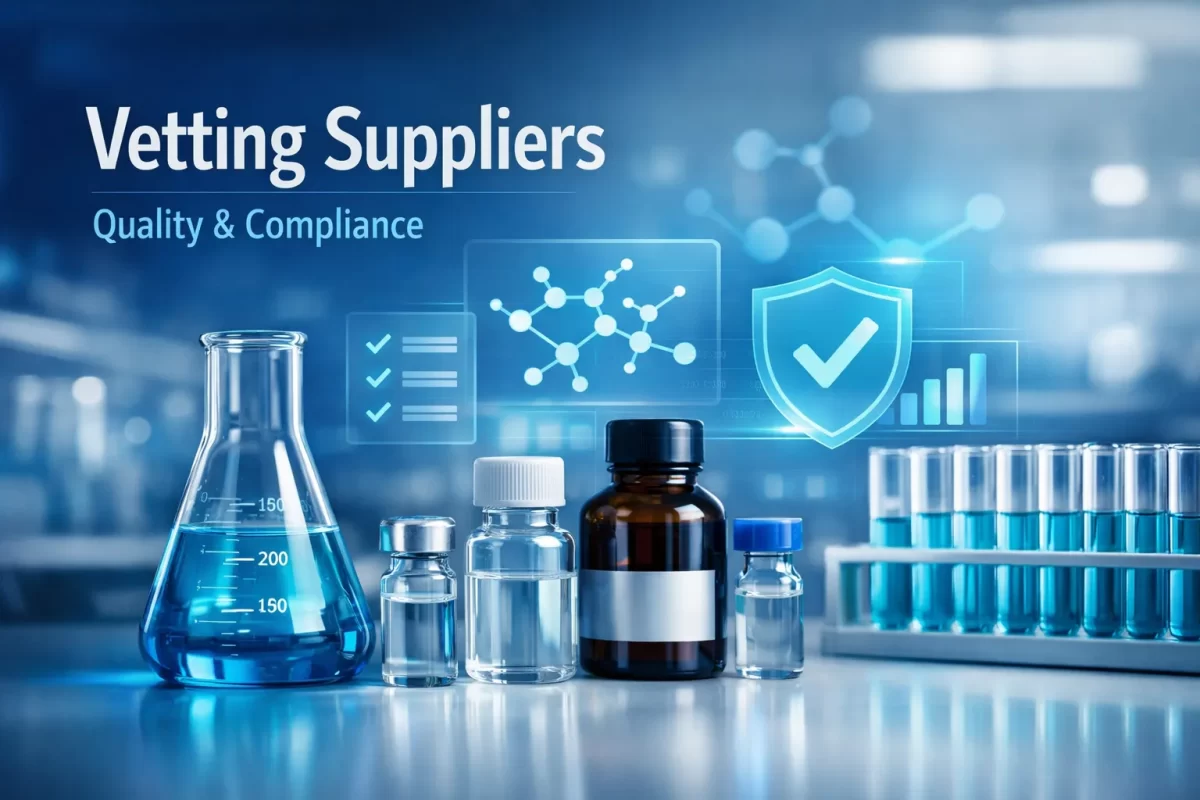
Practical Guide to Vetting Research Compound Suppliers
Feb
Uncertain quality statements and generic “assay” numbers slow projects and risk reproducibility. This article gives a stepwise vetting checklist you can use immediately, a concise primer for reading Certificates of Analysis (CoAs), and a practical shortlist of supplier types so you can act today. For an example of a compliance‑first partner, RocazoneMix publishes batch‑tested CoAs on request, provides traceable lot metadata, and offers technical support for institutional buyers seeking verified materials.
Scope note: this guide covers research‑use‑only sourcing and lab workflows. It does not provide clinical, medical, or human‑use guidance.
Quick vetting checklist — actions to take before you place an order
Run this 60–90‑second triage against any vendor or catalogue entry before you commit funds.
- Confirm product identifiers on the product page: product name, CAS number, molecular formula and whether the listing is tied to a lot number; request the batch‑specific CoA before shipment.
- Ask which analytical methods generated the CoA: HPLC‑PDA/LC‑MS, qHNMR, GC‑MS, ICP‑MS, etc. Request chromatograms or spectra; do not accept an “assay” statement without methods and supporting data.
- Verify the issuing lab’s accreditation and look for an analyst signature or QA stamp on the CoA; request the certifier’s name and certificate number for verification.
- Clarify whether results are batch‑specific or pooled across lots; prefer batch‑specific testing for reproducibility and traceability.
- Request storage/stability notes and an SDS, and confirm packaging type and basic chain‑of‑custody details.
Immediate red flags: no batch CoA, templated CoAs without chromatograms, unspecified methods, missing analyst/QA approval, or unverifiable accreditation.
How to read a Certificate of Analysis (CoA) — what each field really means
Treat the CoA as the primary quality record. Read it systematically instead of skimming; each field answers a traceability or method question you may need to record in your LIMS.
Product, batch and dates
Confirm product name and CAS; the lot/batch number must match the packing slip. Manufacturing and expiry (or retest) dates define the tested sample window and storage expectations—mismatches are non‑trivial.
Analytical methods and references
Methods must be stated with sufficient detail: the technique (e.g., HPLC‑PDA, LC‑MS, qHNMR, GC‑MS, ICP‑MS), column/platform, key parameters or a method reference (e.g., USP monograph or internal SOP). A result without a method is unverifiable. For practical guidance on establishing and validating stability‑indicating HPLC methods referenced on CoAs, see this overview of validation of HPLC methods.
Results versus specification
The CoA should show numeric results and the specification limits they are compared against (e.g., assay %, total impurities, residual solvents). Industry norms for analytical standards often expect ≥95–98% main component by HPLC or qHNMR, with individual unknown impurities typically reported at 0.5–1% and total impurities commonly ≤1–2%—use these norms as context, not absolute rules.
Chromatograms, spectra and attachments
Raw chromatograms or NMR spectra should be included or available on request. Verify that the chromatogram shows a single dominant peak at the claimed retention time and that spectral peaks match the claimed structure.
Analyst signature, QA statement and document control
Look for the analyst or reviewer name, signature, lab accreditation statement (e.g., ISO 17025), issue date and page numbering. A CoA without an approving signature or clear pagination is incomplete.
Reading chromatograms and spectra at a glance
Check that the main peak is symmetrical and well‑resolved, the baseline is stable, and there are no unexplained co‑eluting peaks. In NMR, confirm expected chemical shifts and integration pattern for qHNMR assays. Unexpected shoulders, multiple close peaks or a noisy baseline are reasons to question identity or purity.
Concrete CoA red flags to document on your PO: missing units, missing method descriptions, absent chromatograms/spectra, ambiguous “pass/fail” without data, or no analyst/QA sign‑off. For a concise primer on what a CoA should include, see this overview of Certificate of Analysis components.
Verifying supplier claims and when to ask for third‑party testing
Supplier‑provided CoAs attest the lot as tested by that lab; independent verification adds confidence where audit trails or high value are concerned. Use supplier documentation for routine work, and plan third‑party confirmation for critical buys.
To verify cGMP/ISO/FDA claims, ask for the certificate number, issuing body and the facility name or address. Check certification on the certifier’s portal (for ISO) and regulatory databases where applicable (FDA establishment listings, EudraGMDP, NMPA). For large purchases, request recent audit summaries or a statement of scope for the lab that issued the CoA. The FDA maintains a useful factsheet on current good manufacturing practice to reference when validating supplier claims: FDA cGMP facts.
Insist on third‑party testing when the molecule is novel, the CoA lacks supporting chromatograms or methods, the lot will be used in a critical assay, or you require an independent record for regulatory traceability. Send a sample to an ISO‑17025 lab for confirmatory HPLC, qHNMR or ICP‑MS if needed. Expect time and cost trade‑offs: independent testing adds days and fees but materially reduces downstream risk for high‑value lots. For practical discussion on independent verification, see the power of third‑party testing.
Where to buy — supplier types, pros & cons, and how RocazoneMix fits
Global catalogue houses
Large suppliers provide supply security, broad institutional terms and predictable logistics. They are efficient for common standards but may charge premiums for niche items.
Marketplaces and distributors
Aggregators offer vast selection and rapid comparison. They can introduce variable traceability because the downstream listing may not include full lot documentation from the manufacturer. Niche marketplace listings may include compounds such as 4CMC, Roca Zone Mix, where extra scrutiny of the CoA is warranted.
Specialized analytical‑standard houses
Boutique suppliers focus on tight QC, full method disclosure and batch CoAs. Expect higher quality documentation with possible minimum order quantities or lead times for custom items. Examples of niche items listed with batch documentation include Protonitazene, Roca Zone Mix and Etonitazene, Roca Zone Mix, which illustrate why batch‑specific CoAs and traceability matter for reproducibility.
Contract manufacturers and CROs
Best when you need custom synthesis or scale. They deliver tailored lots but typically require longer lead times and larger minimums.
Prefer suppliers that publish or provide downloadable batch CoAs, maintain transparent lot traceability, and offer method development support. RocazoneMix positions itself as a compliance‑first supplier that makes batch‑tested documentation available on request and provides technical assistance for method development; explore our pages for high‑purity research chemicals and analytical reference standards, or request a batch CoA. See our full products, Roca Zone Mix listing for current stock and catalog items—note that some listings (e.g., Crystal Meth, Roca Zone Mix) require institutional ordering and documentation.
Ordering tip: start with a small trial quantity for method development, validate the lot in‑house or with a reputable lab, then scale to bulk once you confirm fit for purpose.
Ordering logistics, packaging, lead times and payment
Lead times & MOQs
Typical in‑stock analytical standards ship in days to two weeks. Custom synthesis or unusual compounds commonly take weeks to months. Samples for screening are often provided at mg–gram scale; bulk orders frequently begin around 100 g depending on the supplier—always confirm before issuing an institutional PO.
Packaging & transport
Expect amber vials, septa caps, desiccants, and inert packaging for air‑sensitive materials. For hygroscopic or labile compounds, cold‑chain or inert‑gas packaging matters. Shipments should include a packing list, CoA and SDS; for international transfers confirm import permissions and required documentation.
Payment and procurement
Common payment options are credit card, wire transfer and institutional PO; approved institutional accounts may access bulk ordering terms and priority handling. A practical clause to include in your PO is “Lot CoA to be provided prior to shipment” or an acceptance testing window to allow confirmatory analysis on arrival.
For sample acquisition or pre‑purchase documentation requests use the supplier’s sample request route—e.g., request a sample/COA with the lot you intend to test. For bulk needs, inquire about bulk ordering and institutional terms via institutional procurement.
Decision checklist, escalation plan and next steps
Use this compact approval checklist before final sign‑off:
- Product identifiers verified (name, CAS, formula, lot).
- Batch CoA reviewed; methods and results acceptable.
- Issuing lab accreditation or certifier verified.
- Sample testing passed or third‑party confirmation obtained.
- Packaging, storage and shipping meet lab requirements.
- Payment terms and SLAs agreed.
If a buy is high‑risk: place a paid trial order, route the sample to your in‑house or an ISO‑17025 lab, and negotiate return, rework or credit terms before placing bulk orders. Maintain an auditable trail: PO, CoA, shipment documents, and analytical reports.
Compliance reminder: all materials discussed are sold for research use only. They are not for human or animal administration. Buyers are responsible for local import/export rules and institutional approvals.
Download the printable checklist: Download the Vendor Vetting Checklist (PDF). To validate a lot from us, Request a batch CoA or request a sample/COA from RocazoneMix.
Demand evidence, document decisions, and keep reproducibility at the center of procurement. If you need help evaluating a complex lot, our technical team can review CoAs and advise on confirmatory testing—contact RocazoneMix for assistance with high‑value purchases and institutional orders.

