Research Chemicals
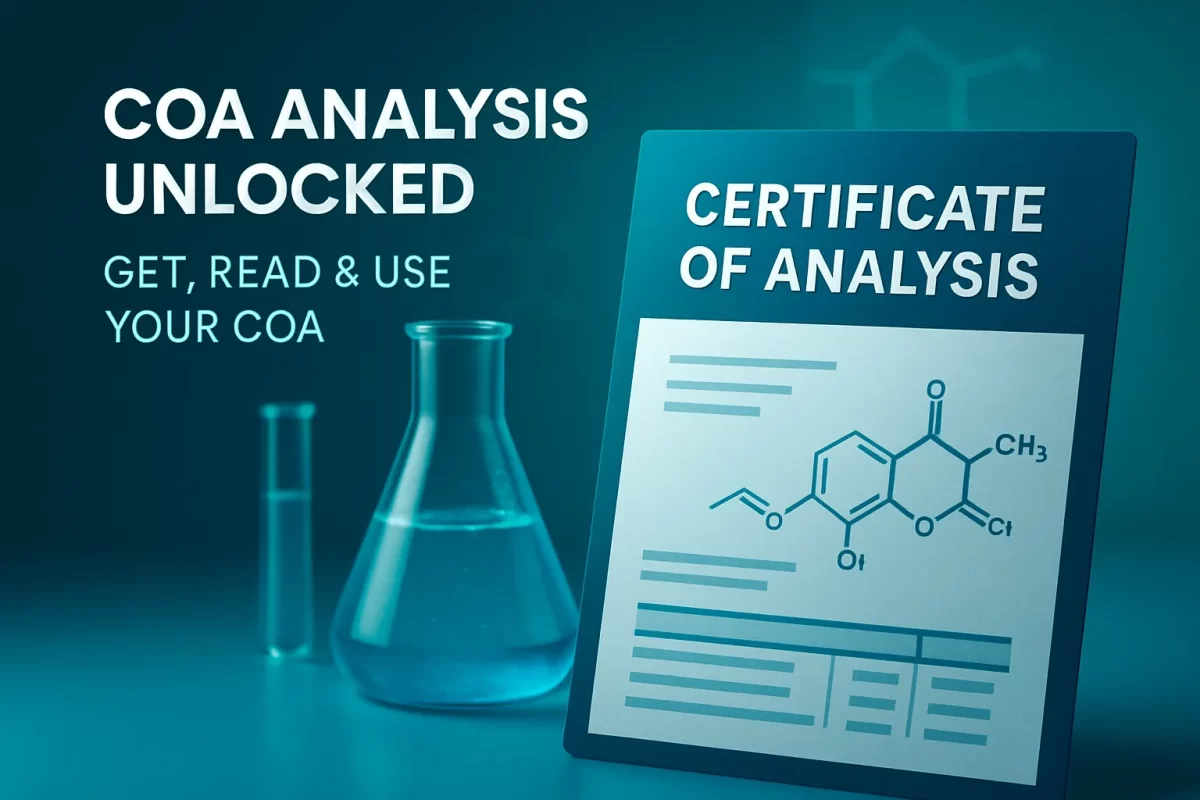
COA Analysis Unlocked: How to Get, Read & Use Your COA
Feb
All materials sold by RocazoneMix are strictly for research and non-human use only.
1. Introduction: Why Your COA Matters More Than Ever
It was a late-night push in our analytical lab when the HPLC readings came back off-spec. We double-checked the sequence, the column, even the mobile phase—but nothing matched the expected profile. The culprit? A missing detail on the supplier’s Certificate of Analysis (COA). That single oversight cost us precious time, wasted reagents, and a regulatory review delay.
Skipping a thorough coa analysis isn’t just an academic misstep—it carries hidden costs. Safety risks multiply if contaminants slip through. Regulatory bodies can flag incomplete COAs, triggering audits or recalls. And let’s not forget the downtime when you have to quarantine an entire batch of material.
At RocazoneMix, we guarantee ≥98% purity with every batch-tested compound, backed by a detailed COA approved under ISO 17025 accreditation. You’ll never wonder if your material is fit for purpose—our data is right there, batch by batch.
In this article, you’ll learn how to:
- Request and download a COA from any reputable supplier (including RocazoneMix).
- Dissect and interpret every section of a COA like a quality auditor.
- Run a real-world comparison experiment between suppliers’ COAs.
- Leverage COA data to optimize research protocols and compliance workflows.
2. What Is a COA? The Foundation of Quality Assurance
A Certificate of Analysis (COA) is a formal document that confirms a specific batch of material meets defined quality and safety specifications. Issued by a manufacturer or accredited lab, it lays out:
- Product identification details (name, CAS number, batch/lot number)
- Test methods employed (HPLC, GC, ICP-MS, etc.)
- Results compared to acceptance criteria
- Relevant dates, signatures, and accreditation stamps
For a detailed overview of COA definitions and requirements, refer to this COA guide with examples. In research and industrial labs, skipping coa analysis is never an option. Data from the FDA and ISO agencies shows that up to 15% of batch failures in regulated environments stem from incomplete or falsified COAs. That translates into millions in wasted inventory and compliance fines each year.
Before diving deeper, here’s a quick glossary:
- CAS Number: Unique identifier assigned by the Chemical Abstracts Service.
- Lot/Batch Number: Tracks production runs for traceability.
- Test Method: Analytical protocol (e.g., reverse-phase HPLC, gas chromatography).
3. Anatomy of a COA: Breaking Down Every Section
Every COA follows a structured layout. For an in-depth look at the importance and key components of a COA, consult this external guide. Here’s what you’ll typically see:
- Supplier & Accreditation Header: Company logo, laboratory address, ISO 17025 or equivalent accreditation marks.
- Product Identification: Chemical name, CAS number, molecular formula, batch/lot number.
- Test Methods: Techniques like HPLC, GC, ICP-MS, UV-Vis, including method references.
- Specifications vs. Results: Acceptance criteria (e.g., purity ≥98.0%), actual values, and status (Pass/Fail).
- Physical Data: Appearance, melting point, density, pH (if applicable).
- Approval & Signatures: QA manager, analyst, date of issuance.
Pro Tip: On every RocazoneMix COA, you’ll find an annotated field explaining each section in plain language. Here’s a simplified view (anonymized):
4. How to Request & Obtain a COA from Your Supplier
COAs can come from in-house quality control labs or third-party facilities. With RocazoneMix, the process is seamless:
- Log in to your RocazoneMix account.
- Navigate to “Order History” and select your product and batch number — for example, a recent order of Apaan Oil.
- Click “Download COA” to save a PDF to your local drive.
If your supplier doesn’t provide a COA online, use this simple email template:
Subject: Request for Certificate of Analysis – [Product Name], Batch #[Batch Number]

Dear [Supplier Name],

Please provide the Certificate of Analysis for the referenced batch at your earliest convenience. We require ISO 17025-accredited documentation for our quality records.

Thank you,
[Your Name]
[Your Lab/Organization]
Average turnaround times vary:
Third-party labs: 2–5 business days.
RocazoneMix online retrieval: Instant, 24/7.
Delayed COAs often result from pending method validation or sample logistics—plan accordingly.
5. Step-by-Step COA Analysis: Read Like an Auditor
Interpreting a COA is a systematic process. Here’s our six-step audit checklist:
- Verify Supplier Credentials: Confirm lab accreditation (e.g., ISO 17025).
- Check Dates: Analysis date, issuance date, expiration (if applicable).
- Match Product Details: Name, CAS number, batch/lot to your order records.
- Decode Test Methods: Ensure methods (HPLC, GC) are validated and recognized.
- Compare Specs vs. Results: Purity ≥ threshold, impurities ≤ threshold.
- Confirm Approval: QA signatures and compliance statements.
Jargon Cheat-Sheet:
- RRF: Relative Response Factor (used in chromatographic quantitation).
- LOD/LOQ: Limit of Detection / Limit of Quantitation.
- Impurity Profile: List and amount of side products or contaminants.
6. Real-World Experiment: Comparing Two COAs
To illustrate the power of detailed coa analysis, we ordered 4CMC from:
- Supplier A (market leader).
- RocazoneMix (our in-house benchmark).
Baseline claimed specs:
- Purity ≥99.0%
- Total impurities ≤0.5%
| Parameter | Supplier A (Claimed) | Supplier A (Actual) | RocazoneMix (Claimed) | RocazoneMix (Actual) |
|---|---|---|---|---|
| Purity (%) | ≥99.0 | 98.2 | ≥99.0 | 99.3 |
| Total Impurities (%) | ≤0.5 | 0.9 | ≤0.5 | 0.3 |
| Heavy Metals | Not Specified | 0.07 ppm | ≤0.1 ppm | 0.05 ppm |
| Moisture (%) | Not Specified | 0.4 | ≤0.5 | 0.2 |
Key Findings: Supplier A fell short on reported purity and omitted heavy metal specs. RocazoneMix’s multi-layer QC checks and comprehensive COA caught potential red flags early, avoiding downstream protocol failures.
We also ran a parallel comparison on Crystal Meth to confirm consistency across different chemotypes.
Lessons Learned: Always verify actual COA results, not just claimed specs. A robust impurity profile can save weeks of troubleshooting.
7. Leveraging Your COA for Smarter Research & Compliance
A complete coa analysis fuels smarter decision-making:
- Audit Logs & Regulatory Submissions: Embed COA PDFs in audit trails and dossiers.
- Protocol Adjustments: Tailor reaction conditions based on impurity thresholds.
- LIMS Integration: Link COA data to sample records in your electronic lab notebook.
- ROI Example: One CRO reduced batch failures by 30% after instituting COA-based release criteria.
Ready to see for yourself? Explore our product catalog and order lab-grade, COA-backed compounds with confidence.
8. Common Pitfalls & Red Flags in COA Analysis
Watch out for these warning signs every time you review a COA:
- Missing or Outdated Dates: No analysis or issuance date.
- Ambiguous Matrix Description: CAS number present but no chemical form specified.
- Unvalidated Methods: No reference to standard protocols (e.g., USP, EP).
- Out-of-Spec Results: Values outside acceptance without commentary.
- No Signatures: Lack of QA approval or accreditation stamp.
- Analysis date missing or expired
- Product ID mismatch
- Test methods unspecified
- Critical parameters out-of-spec
- No QA sign-off
9. Your COA Analysis Checklist & Template
To streamline your review process, download our free COA analysis spreadsheet. It covers:
- Supplier accreditation verification
- Date and batch matching
- Method and result comparison
- Approval tracking
- Red flag alerts
Customize the template for your lab’s SOPs, then automate email alerts when COAs are due for review or expire. Maintaining up-to-date COA records ensures you never miss a compliance deadline.
10. Conclusion & Next Steps
Rigorous coa analysis is the bedrock of safe, reliable research. From verifying supplier credentials to interpreting HPLC and GC data, every step reduces risk, saves time, and ensures regulatory compliance.
Make COA-first workflows a standard in your lab. Order your lab-grade compounds online from RocazoneMix for peace of mind—every batch arrives with a detailed, ISO 17025-accredited COA and ≥98% purity guarantee.
All products are for research and non-human use only.
FAQ Tease: “How long does it take to get a COA?” Visit our support center for quick answers.

