Research Chemicals
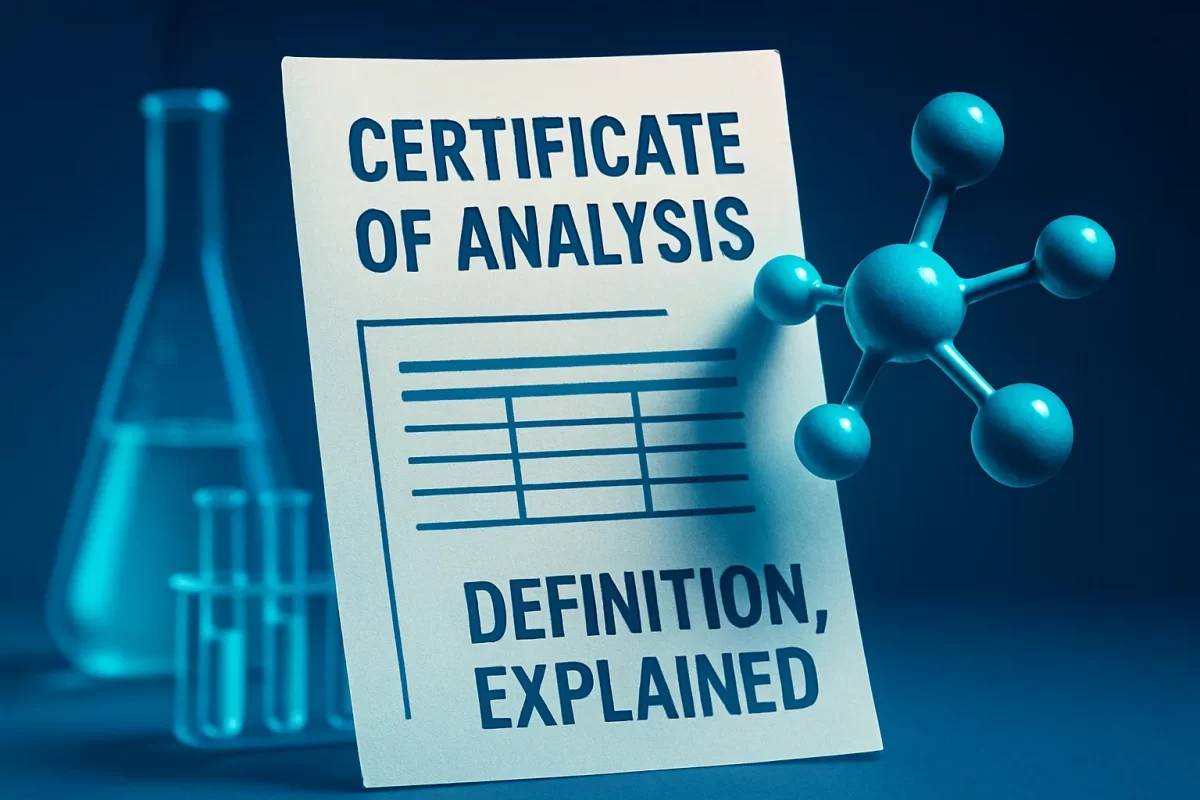
Certificate of Analysis Definition, Explained Like a Zine
Feb
You just ordered a new compound such as Etizolam Powder or Crystal Meth from RocazoneMix and got a PDF called a COA. What even is this thing? It doesn’t look like a recipe or a shipping label. It looks like the love child of a spreadsheet and a spy dossier. But fear not! By the end of this zine-style guide, you’ll be reading any COA with confidence—no PhD required.
The Mystery PDF on Your Lab Bench
Picture this: you unpack your discreetly packaged vial, breathe in that sweet promise of lab-grade purity, and there it is—a two-page PDF packed with numbers, symbols, and a signature at the bottom. You squint: “Pass”? “Fail”? “LOQ”? Your inner monologue screams, “Is this a secret code or the results of my next side quest?”
(Doodle idea: a confused lab technician with question marks hovering over a PDF sheet.)
This is the moment I realized I needed to demystify the certificate of analysis definition once and for all. Let’s unravel the puzzle together, step by step.
What Even Is a Certificate of Analysis?
Is it a recipe? A report card? A spy dossier? A certificate of analysis (COA) is all of those in one neat package. Formally, it’s a lab-prepared, signed document of test results for a specific batch or lot of a product. You’ll see it everywhere in pharmaceuticals, chemicals, food safety—and yes, research chemicals too.
- ID badge: tells you exactly which batch you have (CAS#, lot number, dates).
- Report card: shows purity, potency, contaminants, moisture, and more.
- Signed proof: an authorized analyst or QA manager stamps their name so you know it’s legit.
Analogy time: think of a COA as your compound’s official ID badge + report card combo. No more guesswork—just hard data you can trust.
(Doodle suggestion: a lab coat-wearing badge giving a thumbs-up to a purity report.)
Why COAs Matter: Quality & Compliance
Imagine running an experiment with a mystery compound that’s only 80% pure—your data would be a house of cards. COAs are your quality assurance superheroes:
- Purity & potency: ensures you get ≥98% purity (we include batch-tested COAs so you can skip the guesswork; see our Quality Assurance in Research Chemical Manufacturing).
- Consistency: same reliable results every time you reorder.
- Regulatory check: proof you’re playing by EU GMP, FDA cGMP, ISO 17025 rules—no surprise audits.
At RocazoneMix, every batch ships with a COA showing ≥98% purity, so you can focus on your science, not on chasing down data.
It’s okay not to know all the regulations—just let the COA speak for itself.
Anatomy of a COA: Breaking It Down
Let’s label the parts of a typical parts of a certificate of analysis like they’re panels in a zine. Ready?
1. Header / Issuer Info
- Supplier name & logo
- Contact details
- Document title: “Certificate of Analysis”
2. Product & Batch ID
- Product name
- CAS #
- Lot number
- Analysis date, expiration date
3. Test Methods & Specs
- Chromatography (HPLC, GC)
- Spectroscopy (UV-Vis, IR)
- Acceptance criteria (e.g., ≥98% purity, ≤0.1% moisture)
4. Results Table
- Parameter
- Specification limit
- Actual result
- Pass/Fail or Conform
5. Signature & Accreditation
- Authorized signatory
- ISO 17025 seal or accreditation logo
- QR code for online verification
(Doodle idea: a sketch of a COA page with these sections color-coded.)
How to Read One Step at a Time
Ready for a hands-on walkthrough? Grab that COA PDF and let’s decode it.
Step 1: Match product & batch numbers
Make sure the CAS #, lot number, and product name line up with your order confirmation.
Step 2: Check dates
Look at the analysis date versus the expiration date. You want fresh data.
Step 3: Compare specs vs results
Watch for symbols:
- ≥ means “at least.” (e.g., ≥98% purity)
- ≤ means “no more than.” (e.g., ≤0.1% moisture)
- < means “below detection limit.”
Step 4: Look for “Pass” or “Conforms”
If something flags as “Fail,” it’s not a game over—pause your experiment and ping your supplier.
Step 5: Verify signature or QR code
Scan that code or contact the lab if you need to double-check authenticity.
Here’s a mini mock-up of a results table:
| Parameter | Spec Limit | Actual Result | Status |
|---|---|---|---|
| Water Content | ≤0.5% | 0.7% | Fail |
| Purity | ≥98% | 99.2% | Pass |
If you see a highlighted result, don’t proceed—reach out and get clarification.
Debugging Diary: A RocazoneMix Tale
Let me tell you about the time we caught a sneaky impurity spike.
- I opened the COA from our QC lab and spotted a water content of 0.85%—higher than usual.
- I re-ran the Karl Fischer titration to confirm. Sure enough, the first result was legit.
- We updated the COA, held the batch, and re-shipped a fresh vial with the corrected data.
Lesson learned: never skip reading your COA. Even pros get surprised—COAs catch the sneaky stuff before it reaches your bench.
Cheat Sheet: Mini Zine Summary
Pin this to your lab wall!
- Identity check: CAS # matches ✅
- Purity spec: ≥98% ✅
- Contaminants: ≤0.1% ✅
- Dates: Analysis < Expiry ✅
- Signature: Accredited lab seal ✅
(Doodle frames around each bullet for extra zine flair.)
Next Steps & Resources
If your COA results look off, contact RocazoneMix QA. We’re here to help you troubleshoot.
Dive deeper:
Disclaimer: Products for research use only. Not for human or veterinary use. Always adhere to your institution’s safety protocols and local regulations.
Ready for reliable, batch-tested compounds? Explore our catalog and get your COAs instantly with every order!

