Research Chemicals
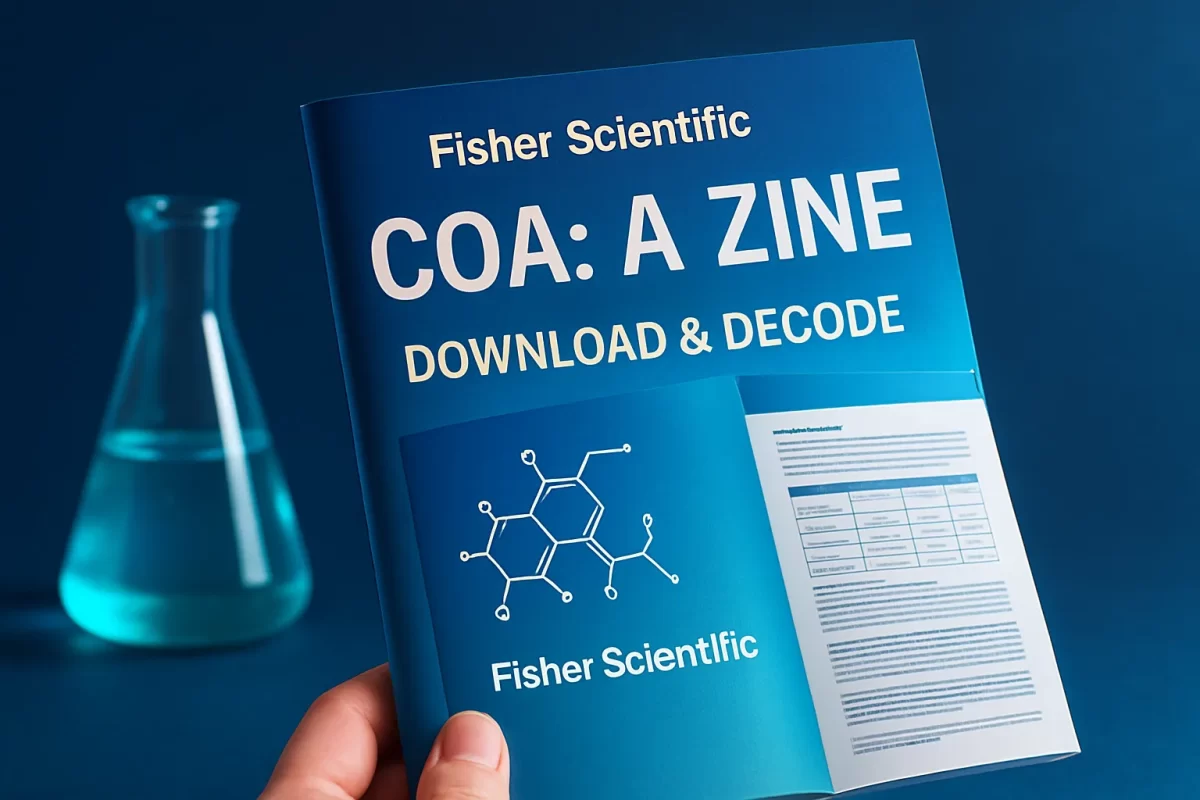
Fisher Scientific COA: A Zine to Download & Decode It
Feb
📖 Introduction: My First COA Adventure
Last quarter, we at RocazoneMix shipped a fresh batch of high-purity research chemicals to an academic lab. Whether it’s potent opioids like Etonitazene, Roca Zone Mix or stimulants such as 4CMC, Roca Zone Mix, every batch ships with a detailed COA. The customer reached out: “Great, but where’s the Fisher Scientific COA?” I realized I didn’t fully appreciate how vital a Certificate of Analysis (COA) is—think of it as a nutrition label for your reagent. It tells you exactly what’s inside, how pure it is, and sets the foundation for reliable, reproducible experiments.
So, what even is a fisher scientific coa? It’s a document provided by Fisher Scientific that verifies a specific lot of chemical meets stated specifications: purity grades, impurity profiles, metrological properties, and more. It’s your primary tool for quality assurance, compliance, and peace of mind.
Why you should care:
- Validate purity before critical protocols.
- Avoid unexpected contaminants that can ruin assays.
- Support regulatory compliance and documentation.
🧭 1. Where to Find Your Fisher Scientific COA
On the Fisher Scientific US website (fishersci.com), the Product Certificates search tool is your gateway. Here’s how to navigate:
- Click the hamburger menu (☰) in the top-left corner.
- Select Document and Certificates > Certificates.
- Enter your Catalog Number (required) and Lot Number (optional).
- From the Document Type dropdown, choose Certificate of Analysis.
- Hit Search.
Pro Tip: Bookmark the search tool URL after signing in so you can jump straight to the form next time. If you see no results, double-check you’re on the US site (fishersci.com) and not the UK version (fishersci.co.uk).
This mirrors our in-house standards as detailed in our Quality Assurance in Research Chemical Manufacturing article.
⬇️ 2. How to Download the PDF
Once the search results appear, you’ll see PDF icons next to each lot. Here’s your download ritual:
- Click the PDF icon. It opens in a new browser tab.
- Save the file with a descriptive name, e.g.,
My_COA_Lot1234.pdf. - Store it in your experiment folder or a shared drive.
If you can’t find the COA via search:
- Check the product detail page for a direct “Certificates” link.
- Contact Fisher Scientific Customer Service or email regulatory.documents@thermofisher.com.
🔍 3. Decoding the COA: Key Sections Explained
Opening a COA can feel like staring at dense specs. But it’s really just a structured report with three main sections:
Section A: Purity Grades
Purity grades tell you which standard the reagent meets. Common grades include:
- ACS (American Chemical Society) – general-purpose, ≥95% purity.
- HPLC / Optima™ LC/MS – filtered to 0.1 µm, metal impurities at ppb levels, UV screening at 200–400 nm.
- UHPLC-MS Optima™ – the gold standard for mass-spectrometry, ultra-low metal specs, gradient suitability tests, and borosilicate glass packaging.
Example entry:
“UHPLC-MS Optima screened for <300 ppb ions, UV absorbance 200–400 nm.”
Section B: Impurity Profiles
This table lists measured levels of trace impurities versus maximum allowable limits. Here’s a mini-example:
| Impurity | Specification Limit | Lot Result |
|---|---|---|
| Iron (Fe) | <0.5 ppm | 0.12 ppm |
| Chloride (Cl⁻) | <10 ppm | 5.8 ppm |
At RocazoneMix, we use the same reporting format, so you can directly compare our in-house COAs to Fisher Scientific’s.
Section C: Metrological Terms
For ISO-certified reference materials, you’ll see terms like:
- Accuracy: How close the measured value is to the true value.
- Precision: Repeatability of measurements (low variability = high precision).
- Stability: Resistance to degradation under storage conditions.
- Homogeneity: Uniformity within and between bottles—critical for sampling consistency.
- Traceability: Chain of calibrations back to national standards (e.g., NIST).
- Uncertainty: The confidence interval around a measurement (± range).
Confession: I had no clue what “homogeneity” meant until I sketched molecules in identical flasks—then it clicked!
For a deeper dive into ISO standards, check out Fisher Scientific’s guide to ISO accreditation.
🛠️ 4. Troubleshooting & Debugging Tips
Sometimes your fisher scientific coa search comes up empty. Here’s how to recover:
- Ensure your lot number is at least 3 characters long.
- Try the older Thermo Fisher Documents tool as a fallback.
- Reload the page or clear cookies—occasional session errors happen.
- “Certificate unavailable” notices often mean the lot is newly shipped; wait 24 hours.
- For SureTRACE® products, certificates appear only after shipment—check your Order Details tab.
Still stuck? Contact Fisher Scientific Customer Service via chat, phone (1-800-227-6701), or email at regulatory.documents@thermofisher.com.
📋 5. Quick COA Cheat Sheet
Keep this one-page summary near your bench:
- Navigation: ☰ → Document and Certificates → Certificates.
- Search: Catalog number + optional lot number > select “Certificate of Analysis” > Search.
- Download: Click PDF icon → Save with descriptive name.
- Key fields: Purity grade, impurity table, metrological terms.
It’s okay if you don’t memorize every step. Bookmark this article and your internal “Top 3 Things to Check on Every COA” note.
🚀 Next Steps & Resources
- Integrate COA data into your experiment protocol—verify lot-specific values before use.
- Compare COAs across suppliers: RocazoneMix vs. Fisher Scientific.
- Browse our full range of Research Chemicals, Roca Zone Mix for your protocols.
- Explore related zines on our blog:
You’ve got this! Confidently download, decode, and document your next fisher scientific coa.
🛒 About RocazoneMix
RocazoneMix is an online research chemical supplier and laboratory-grade compounds distributor specializing in high-purity, batch-tested chemicals (≥98% purity). We serve academic, pharmaceutical R&D, analytical testing, and biotech labs worldwide. Every order includes a COA—no hunting required.
All products are strictly for research and laboratory use only. Not for human or animal consumption.
Ready to order? Browse our high-purity research chemicals catalog and place your secure online order today. Or visit our products, Roca Zone Mix page for the full lineup.

