Research Chemicals
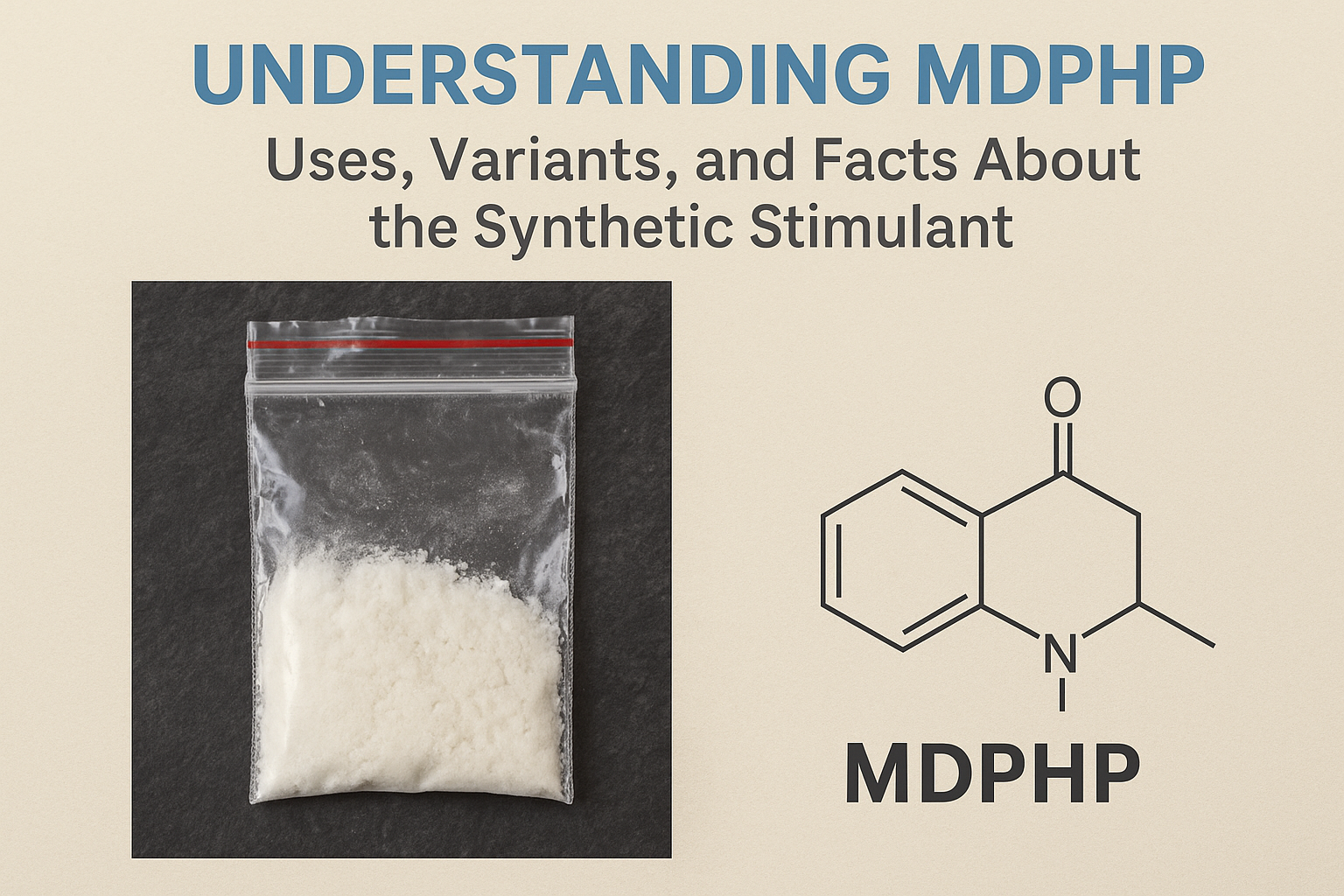
Understanding MDPHP: Uses, Variants, and Facts About the Synthetic Stimulant
Nov
What is MDPHP?
MDPHP (3′,4′-Methylenedioxy-α-pyrrolidinohexiophenone) is a synthetic cathinone, a class of compounds chemically related to the naturally occurring stimulant cathinone found in the khat plant. It belongs to the pyrrolidine family of stimulants — similar to compounds like MDPV, α-PHP, and α-PVP.
Originally studied for forensic and analytical research, MDPHP gained attention in toxicology reports and laboratory studies due to its potent stimulant properties. It has no approved medical use and is banned or controlled in most countries.
Common Names and Aliases
MDPHP is known by several alternative or street names, which may vary by region or supplier:
MDPHP (scientific abbreviation)
Monkey Dust
“Bath salts” (a general slang term for synthetic cathinones)
Hexen analog
3,4-MDPHP
MDPH
These names are often used interchangeably in discussions or forensic reports but refer to the same or closely related compounds.
Forms and Types of MDPHP
Forensic testing has shown that MDPHP can appear in several distinct physical forms, which may differ by synthesis batch or purity level. The three most commonly reported variants are:
White Crystalline Form – Fine powder, typically of higher purity used in analytical research.
Yellowish or Off-White Crystals – Often due to impurities or exposure to moisture.
Brown or Tan Powder – Usually associated with less refined samples or degradation.
⚠️ Note: Color variation does not reliably indicate purity or safety. Laboratory-grade analytical verification is required to identify any chemical accurately.
Reported Effects and Risks
MDPHP acts as a central nervous system stimulant. According to toxicological literature, it may cause effects similar to other pyrrolidine stimulants, including:
Increased energy and alertness
Elevated heart rate and blood pressure
Euphoria and agitation
Insomnia or restlessness
However, adverse effects are well-documented, including paranoia, hyperthermia, cardiovascular stress, and severe anxiety. Misuse or overdose can be life-threatening.
Legal Status
MDPHP is listed as a controlled substance in several regions, including the United States, European Union, and United Kingdom. It is illegal to manufacture, sell, or possess for human consumption in these jurisdictions.
Researchers must comply with local and international controlled substance laws when handling or studying this compound.
Harm Reduction and Safety Awareness
For individuals researching or studying synthetic stimulants, harm reduction principles are essential:
Always use laboratory-grade testing kits to confirm chemical identity.
Do not consume unverified substances from unregulated sources.
Store and handle under proper chemical safety protocols.
If symptoms of overdose or poisoning occur, seek emergency medical help immediately.
🔗 Related Educational Reads:
Understanding Synthetic Cathinones (“Bath Salts”)
MDPV vs MDPHP: Chemical and Behavioral Differences
The Science Behind Stimulant-Induced Psychosis
Conclusion
MDPHP remains a topic of interest in forensic and toxicological research, largely due to its chemical similarity to other potent stimulants. While often misrepresented in online markets, it is important to view MDPHP strictly through an educational and scientific lens, emphasizing awareness, legality, and safety.

